Coffee brewing methods compared
Every major coffee brewing method broken down: what ratio to use, what grind size, how long it takes, and what the coffee actually tastes like. Side-by-side comparison so you can pick the right method for how you drink coffee.
Quick answer
The main coffee brewing methods are drip (1:15), french press (1:12), pour over (1:15-16), espresso (1:2 dose-to-yield), cold brew (1:8), and moka pot (1:10). Each uses a different grind size, ratio, and brew time because the extraction mechanism is different. Drip and pour over produce clean, bright coffee. French press produces heavy, full-bodied coffee. Espresso produces concentrated shots. Cold brew produces smooth, low-acid coffee.
All brewing methods at a glance
| Method | Ratio | Grind | Time | Type | Flavor |
|---|---|---|---|---|---|
| Drip | 1:15 | Medium | 4-6 min | Percolation | Clean, balanced, easy |
| French press | 1:12 | Coarse | 4 min | Immersion | Heavy, oily, full body |
| Pour over (V60) | 1:15 | Medium-fine | 2:30-3:30 | Percolation | Bright, complex, clean |
| Chemex | 1:16 | Medium-coarse | 3:30-4:30 | Percolation | Ultra-clean, tea-like, delicate |
| Espresso | 1:2* | Very fine | 25-30s | Pressure | Concentrated, intense, crema |
| Moka pot | 1:10 | Fine (not espresso) | 4-5 min | Pressure | Strong, bold, espresso-like |
| Cold brew | 1:8 | Coarse | 12-18h | Immersion | Smooth, sweet, low acid |
| Percolator | 1:15 | Coarse | 7-10 min | Recirculation | Strong, bold, robust |
*Espresso uses dose-to-yield ratio (grams in → grams out), not coffee-to-water like other methods.
Immersion vs percolation: why ratios differ
Every brewing method falls into one of two categories, and understanding the difference explains why the ratios vary so widely. Immersion methods (french press, cold brew) submerge the grounds in water for the entire brew time. The water around the grounds gradually saturates with dissolved coffee, and extraction slows as equilibrium approaches. Percolation methods (drip, pour over) pass fresh water through the grounds continuously, maintaining a steep concentration gradient that keeps extraction efficient.
This is why french press uses a tighter ratio (1:12) than drip (1:15). The immersion extraction is less efficient — each gram of coffee gives up less flavor because the surrounding water quickly becomes saturated. A higher dose compensates for that inefficiency. Pour over sits between the two because the brewer controls the pour rate, but the principle is the same: faster water turnover means more efficient extraction means you can use less coffee per unit of water.
Espresso breaks both models. It forces water through a compressed puck at 9 bars of pressure, extracting at a rate that neither immersion nor gravity percolation can match. The result is so concentrated that the ratio is expressed differently — grams of coffee in versus grams of liquid out — and the numbers (1:2) would be nonsensical in any other context. A 1:2 french press would be undrinkable sludge. A 1:2 espresso is a balanced double shot.
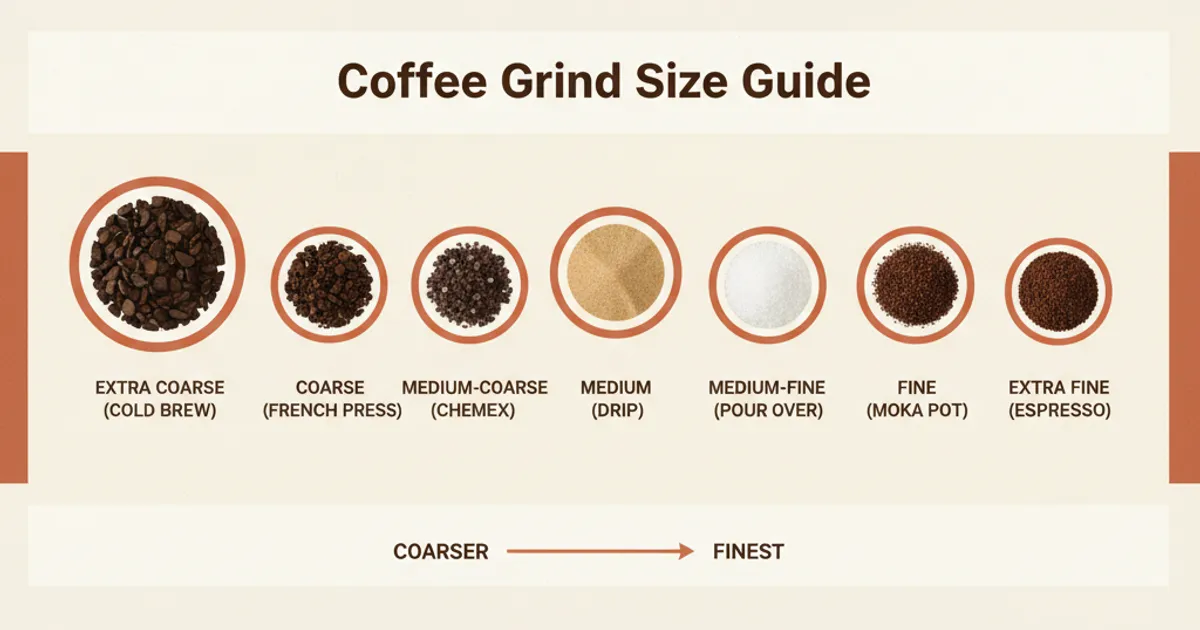
Grind size and extraction
Grind size controls how much surface area the water contacts. Finer grinds expose more surface area, which accelerates extraction. Coarser grinds expose less, which slows it. Each brewing method needs a specific grind size because each method has a different contact time — and the grind must be calibrated so extraction finishes in the available window.
Espresso uses the finest grind because the contact time is only 25-30 seconds. Every particle needs to give up flavor almost immediately. French press uses the coarsest grind because the 4-minute steep gives ample time for extraction — a fine grind in a french press would over-extract severely during that window, producing bitter, astringent coffee. Drip and pour over sit in the middle: medium grinds for the 3-6 minute brew times typical of gravity-fed methods.
The practical consequence: you can't use one grind size for multiple methods. Universal "all-purpose" grinds from grocery stores are a compromise that works adequately in drip machines but produces poor results in french press (too fine, creates sludge) and terrible results in espresso (too coarse, water rushes through). If you brew with more than one method, a grinder with adjustable settings is the single most important equipment upgrade you can make.
Choosing the right method for you
You want convenience with no thinking. Drip coffee. Measure once, press the button, walk away. A good drip machine with the right ratio produces excellent coffee with zero skill. The Moccamaster is the gold standard if you're willing to spend for consistent results.
You want maximum body and richness. French press. The metal mesh filter lets all the oils through, producing the heaviest, most full-bodied cup of any common method. The tradeoff is sediment and a slightly gritty texture. If you want the body without the grit, the Hoffmann method helps.
You want clarity and complexity. Pour over or Chemex. Paper filtration removes oils and fine particles, producing a clean, bright cup where individual flavor notes stand out. The V60 emphasizes brightness; the Chemex emphasizes delicacy. Both require attention and a gooseneck kettle for best results.
You want smooth, low-acid coffee. Cold brew. Cold water simply doesn't extract the acids that make hot coffee sharp. The result is naturally sweet, smooth, and gentle on sensitive stomachs. The downside is the 12-18 hour brew time — you're planning tomorrow's coffee today.
You want concentrated, espresso-style coffee. Moka pot for budget espresso-style, or real espresso if you want to invest in a machine and grinder. Moka pots produce strong, bold coffee at a fraction of the espresso equipment cost. True espresso requires more gear but produces crema and the concentration needed for lattes and cappuccinos.
Water temperature across methods
Almost every hot brewing method targets the same water temperature: 195-205°F (90-96°C). This is the range where water dissolves desirable coffee compounds efficiently without scorching the grounds. Below 190°F, extraction is sluggish and produces sour, under-developed coffee. Above 210°F (boiling), the water attacks harsh compounds that produce bitter, ashy flavors.
The practical advice is the same for all hot methods: boil your kettle, then wait 30-45 seconds before pouring. If you have a variable temperature kettle, set it to 200°F and forget about it. The only exception is cold brew, which uses cold or room-temperature water by definition, and achieves its extraction through extended contact time rather than heat.
Espresso machines handle temperature internally — the boiler or thermoblock maintains the target range. Moka pots use stovetop heat, and the water temperature rises during brewing (which is why you should remove the moka pot from heat as soon as coffee begins sputtering, before the final superheated steam pushes through and scalds the coffee).
All brew methods
French Press
1:10 — 1:15
Full-bodied, rich. 4 min steep.
Pour Over
1:15 — 1:17
Clean, nuanced. V60, Kalita, Chemex.
Cold Brew
1:4 — 1:8
Concentrate or ready-to-drink.
Espresso
1:1.5 — 1:2.5
Intense, pressurized extraction.
Moka Pot
1:6 — 1:8
Stovetop, strong, espresso-like.
Chemex
1:15 — 1:17
Ultra-clean, bright, paper-filtered.
Ask the brew bot
Have a specific question? “How much coffee for my 34oz Bodum?” or “Why does my cold brew taste weak?”
Coming soon
Common questions
There is no single best method — each produces a fundamentally different cup. Pour over and Chemex produce bright, clean coffee that highlights origin flavors. French press produces heavy, oil-rich coffee with full body. Espresso produces concentrated, intense shots. Cold brew produces smooth, low-acid coffee. The 'best' method is the one that matches how you like your coffee to taste.